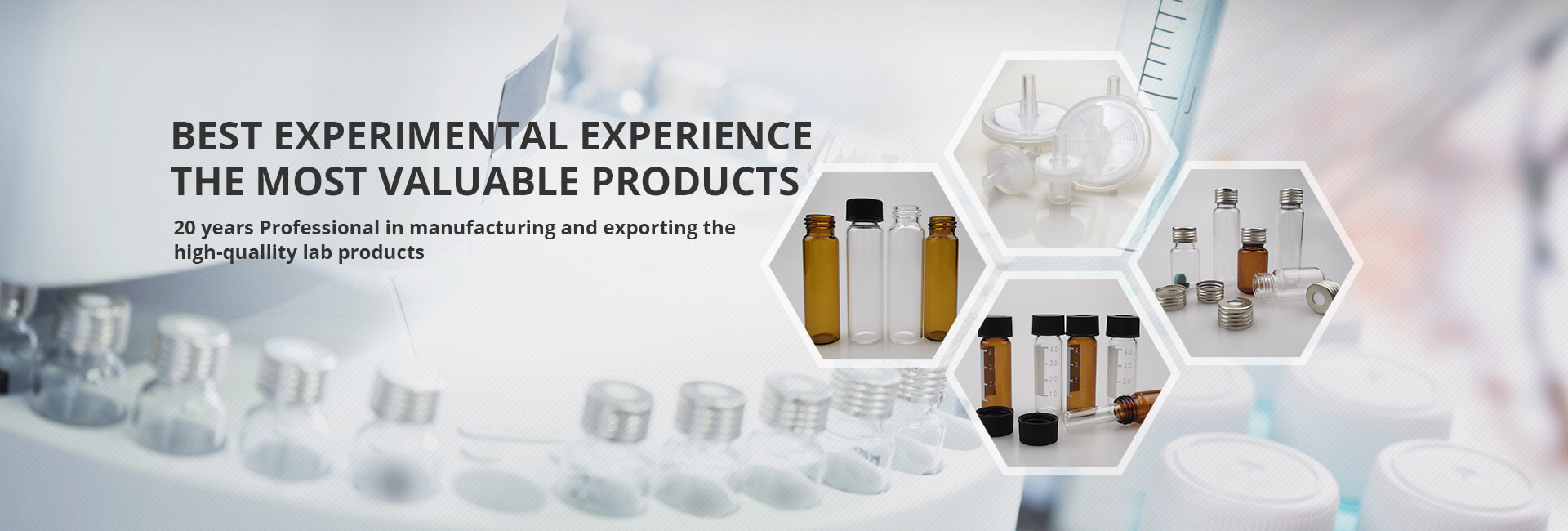
A 2 mL HPLC vial from a low-cost supplier lands at $0.08 per unit on the invoice. Six months later, the lab has scrapped 11,000 of those vials because the septum coring rate hit 40% after three injections. The real cost per usable unit was not $0.08. It was $0.31 after freight, duty, inspection labor, storage, and failure replacement. That gap between invoice price and usable cost is the landed cost calculation most procurement teams never build. A chromatography vial landed cost calculation has to account for every dollar between the factory floor and the autosampler tray, including the vials that never make it into a run.
Most buyers treat freight as a fixed overhead line. That works for furniture. It fails for chromatography vials because the product is light, bulky relative to weight, and often shipped in partitioned trays that waste volumetric efficiency. A standard 100-position polypropylene tray for 2 mL vials weighs about 210 g empty and occupies roughly 1.9 L of carton volume. The vials inside weigh less than 600 g. You are paying to ship mostly air and plastic dividers.
I have seen air freight quotes where the volumetric weight multiplier turned a 400 kg actual shipment into a 1,100 kg chargeable shipment. At $4.80 per chargeable kg from Shanghai to Chicago, that is $5,280 on a shipment of 480,000 vials. That adds $0.011 per vial before a single vial is inspected. If the same order ships by sea with a 28-day transit time, the freight drops to $0.002 per vial, but you now carry 28 days of inventory cost and a longer cash-to-cash cycle.
The correct way to model freight is per usable vial, not per ordered vial. If 2% of vials arrive with cracked necks or broken trays from vibration, freight per usable vial rises. A $0.011 freight charge on a 98% usable shipment becomes $0.0112. That sounds trivial. Across 1 million vials per year, it is $1,120 of pure freight waste on vials you cannot use.
Ask your supplier for the carton dimensions and gross weight before you commit. Then calculate chargeable weight yourself. If the supplier packs 100 vials per tray and 10 trays per carton, you are moving 1,000 vials in roughly 0.023 m³. Compare that against a supplier who packs 144 vials per tray in a denser carton. The difference in freight per 100,000 vials can be $400 to $900 depending on lane and mode. That is real money that never appears on the unit price quote.
Duty classification changes the math by 3 to 8 percent before inspection
Chromatography vials are not all classified the same way. Glass vials without septa or caps typically fall under HS 7017.90 for laboratory glassware. Vials sold as kits with septa and caps can be classified under HS 3926.90 for plastic laboratory articles if the cap dominates value, or under HS 7017.90 if the glass dominates. The duty rate differs by country of origin and trade program. A vial kit from China classified under 7017.90 may carry a 5% duty plus the Section 301 tariff if applicable. The same kit classified under 3926.90 may carry a different rate.
I have watched two labs import the same physical product from the same supplier and pay different duty because one broker classified the kit by glass value and the other by plastic cap value. The difference was 2.8% of invoice value. On a $60,000 order, that is $1,680. No supplier quote includes this. Your customs broker decides it after the goods are in transit.
For a chromatography vial landed cost calculation, you need the actual HS code your broker will use, not the one the supplier prints on the commercial invoice. Get it in writing from the broker before the shipment sails. If you import both glass vials and assembled kits, split the line items. Do not let the broker lump them under one code for convenience. The convenience costs you duty dollars.
Also account for merchandise processing fees, harbor maintenance fees, and any antidumping or countervailing duty exposure. Borosilicate glass vials from certain countries have been subject to trade actions in the past. A 25% AD/CVD rate does not show up on Alibaba. It shows up on your customs entry summary three weeks after the goods land. That is a landed cost line that can double your per-vial cost overnight.
Inspection labor is a cost per accepted vial, not a cost per rejected lot
Most procurement teams budget for incoming inspection as a fixed QC overhead. That is wrong for chromatography vials because the inspection burden scales with lot size and defect rate, not with purchase order count. If you inspect 200 vials from a 100,000-vial lot using AQL 1.0, you spend maybe 90 minutes of technician time. If the lot fails and you move to 100% inspection, you spend 40 hours. That labor is a direct landed cost on that lot.
I worked with a lab that received 250,000 vials from a new supplier at $0.07 per vial. The AQL 1.0 sample of 315 vials found 12 vials with visible glass chips at the neck. That is a 3.8% defect rate, above the 2.5% rejection threshold. The lab moved to 100% visual inspection. Three technicians spent five days sorting, at a loaded labor rate of $42 per hour. That is $5,040 in inspection labor. They rejected 9,400 vials. The inspection cost per accepted vial was $0.021. The $0.07 vial now costs $0.091 before freight and duty.
The calculation is straightforward. Inspection cost per accepted vial equals inspection labor hours multiplied by loaded labor rate, divided by the number of vials accepted after inspection. If you do not run this number, you will report a unit price that has no relationship to what actually reached your stockroom.
For septa, the inspection burden is heavier. A 9 mm PTFE/silicone septum costs $0.015 to $0.04 depending on grade. Testing puncture resealability requires an autosampler needle, a pressure rig, or a gas-tight syringe. You cannot visually inspect a septum for coring. You have to run it. A 50-septum functional test takes about 2 hours of instrument and analyst time. At $85 per hour fully loaded, that is $170 per lot. On a lot of 50,000 septa, that adds $0.0034 per septum. On a lot of 5,000 septa, it adds $0.034 per septum. The smaller the lot, the more inspection dominates the landed cost. This is why small labs often pay more per usable vial than large labs, even when they buy from the same supplier at the same invoice price.
Storage is not free, and vials degrade in the stockroom
Glass vials do not last forever in a warehouse. The main degradation modes are septum hardening, cap liner compression set, and glass surface adsorption changes. A silicone septum stored for 18 months at 25°C will lose resealability because the silicone crosslinks further and stiffens. A PTFE-faced septum stored under compression in a capped vial will develop a permanent set in the liner. The first puncture after long storage can tear instead of reseal.
I have seen a lab store 300,000 vials with pre-assembled caps in a non-climate-controlled warehouse in Houston. Summer temperatures reached 38°C. The septa hardened. The coring rate on those vials went from 2% to 18% within one year. The lab did not notice until a GC method started showing ghost peaks from septum particles in the inlet. The replacement cost was $21,000. The storage cost was not just the $3,600 in warehouse space for the year. It was the $21,000 in destroyed product plus the lost instrument time.
Storage cost per vial per year is a real number. Calculate it as warehouse cost per cubic meter per month, multiplied by the volume your vial inventory occupies, divided by the number of vials in inventory. A typical lab warehouse cost is $18 to $35 per cubic meter per month. A pallet of 100,000 vials in trays occupies about 1.4 m³. At $25 per m³ per month, that is $35 per month, or $0.0042 per vial per year. That is small. The bigger storage cost is the risk of degradation and obsolescence.
If your method changes and you move from a 9 mm to a 10 mm opening, or from clear to amber glass, the stored vials become dead inventory. The write-off is a landed cost on the vials you did use, because the procurement decision to buy in bulk created the exposure. I recommend storing no more than 6 months of vial inventory unless you have a signed long-term method commitment. The savings from a volume discount of 8% on a 12-month supply can be wiped out by a 15% obsolescence write-off.
Failure cost is the multiplier that makes cheap vials expensive
The most ignored line in a chromatography vial landed cost calculation is the cost of a failed run. A vial that cracks in the autosampler, a septum that cores, a cap that loosens, a vial that sits too high in the tray: any of these can abort a sequence. The cost is not just the vial. It is the lost instrument time, the lost standards, the rerun labor, and the delayed results.
Let me put numbers on it. A typical HPLC method runs 10 minutes per injection. A sequence of 50 samples takes 500 minutes, or about 8.3 hours of instrument time. If one vial fails at injection 23, the autosampler may stop the sequence. The analyst restarts from vial 23, but the first 22 injections are already done. The lost time is the 27 remaining injections that did not run, plus the setup time to restart. At a loaded instrument cost of $120 per hour, a 4.5-hour delay costs $540. Add 30 minutes of analyst time at $45 per hour, and the failure costs $562.50. That is the equivalent of 7,031 vials at $0.08 each.
Now apply a failure rate. A good vial and septum combination should have a failure rate below 0.1% in routine use. A poor combination can fail at 1% to 3%. On 100,000 injections per year, a 1% failure rate means 1,000 failed runs. At $562.50 per failure, that is $562,500 in failure cost. The vial unit price is irrelevant at that scale. A $0.08 vial with a 2% failure rate costs more than a $0.15 vial with a 0.05% failure rate, every time.
The failure cost is why I tell labs to buy septa based on puncture count, not price. A standard PTFE/silicone septum rated for 3 punctures costs $0.02. A premium septum rated for 10 punctures costs $0.05. If your method requires 5 injections per vial, the standard septum fails on the fourth injection and you lose the sample. The premium septum survives. The extra $0.03 per septum is not a cost increase. It is insurance against a $562 failure event.
Worked example: from $0.08 invoice to $0.19 usable
Here is a complete chromatography vial landed cost calculation for a mid-sized lab importing 500,000 2 mL clear glass HPLC vials with 9 mm caps and PTFE/silicone septa from a supplier in China.
- Invoice price: $0.08 per vial kit, FOB Shanghai. Total $40,000.
- Freight: 12 pallets, 5,400 kg chargeable weight, air freight at $4.20 per kg. Total $22,680, or $0.045 per vial.
- Duty and fees: HS 7017.90, 5% duty on $40,000 = $2,000. Merchandise processing fee $565. Harbor maintenance fee $50. Total $2,615, or $0.005 per vial.
- Incoming inspection: AQL 1.0 sample passes, 90 minutes of technician time at $42 per hour = $63. Functional septum test on 50 units, 2 hours at $85 per hour = $170. Total $233, or $0.0005 per vial.
- Storage: 6 months in a climate-controlled warehouse at $25 per m³ per month. Inventory volume 7.2 m³. Total $1,080, or $0.002 per vial.
- Failure replacement: Historical failure rate for this supplier is 1.2%. That means 6,000 vials will fail in use. Replacement cost at $0.08 per vial = $480. Failure labor and instrument time at $562.50 per failure event, assuming 1,200 failure events per year (each event affects one vial out of a sequence, but the sequence cost is the same), total $675,000. That is $1.35 per ordered vial.
The failure cost dominates the calculation. If you exclude it, the landed cost is $0.08 + $0.045 + $0.005 + $0.0005 + $0.002 = $0.1325 per vial. That is a 65% markup over invoice. Include the failure cost, and the real cost per usable vial is $1.48. The vial is not the expensive part. The failure is.
Now run the same calculation for a premium supplier at $0.14 per vial with a 0.1% failure rate. Freight is the same $0.045. Duty is $0.007. Inspection is $0.001. Storage is $0.002. Failure replacement is 500 vials at $0.14 = $70. Failure events at 100 per year, $562.50 each, total $56,250, or $0.1125 per ordered vial. Total landed cost per usable vial: $0.14 + $0.045 + $0.007 + $0.001 + $0.002 + $0.1125 = $0.3075. The premium vial costs $0.3075 per usable unit. The cheap vial costs $1.48 per usable unit.
The invoice price difference was $0.06. The usable cost difference was $1.17 per vial in the wrong direction.
Decision checklist for a landed cost quote
Before you sign a purchase order, run this checklist. Every item has a number attached. If the number is missing, the quote is incomplete.
- Carton dimensions and gross weight per 1,000 vials. Calculate chargeable weight for your lane. If the supplier cannot provide this, walk away.
- HS code and country of origin on the commercial invoice. Confirm with your broker that the code matches the physical product. A mismatch is a customs penalty waiting to happen.
- AQL inspection level and sample size. AQL 1.0 is the minimum for chromatography vials. AQL 0.65 is better for critical dimensions. Do not accept AQL 2.5 for glass vials.
- Septum puncture rating. Ask for the number of punctures the septum survives before coring exceeds 5%. A standard PTFE/silicone septum should survive 3 punctures. A premium one should survive 10. If the supplier cannot provide a puncture count, test it yourself before committing.
- Glass dimensional tolerance. The outer diameter of a 2 mL HPLC vial should be 11.6 mm ± 0.1 mm. The neck opening should be 9 mm ± 0.05 mm for 9 mm caps. A vial that is 0.2 mm out of tolerance will jam in the autosampler tray. Check the supplier's tolerance sheet against these numbers.
- Cap torque specification. A 9 mm cap should seat at 0.09 to 0.11 N·m. Over-torquing crushes the septum and causes coring. Under-torquing causes leaks and evaporation. If the supplier cannot state a torque range, their caps are not controlled.
- Storage conditions and shelf life. Ask for the recommended storage temperature and the shelf life in months. A good supplier will state 24 months at 20°C to 25°C in sealed packaging. If they say "indefinite," they are guessing.
- Failure rate warranty. A supplier who will not warranty against a 0.5% failure rate is telling you their product fails more often than that. Ask for a written replacement policy tied to a failure rate.
Field case: the freight quote that hid the real volume
A lab in New Jersey ordered 200,000 vials from a supplier in Shenzhen. The supplier quoted $0.065 per vial FOB. The lab's freight forwarder quoted $1,850 for air freight based on the supplier's stated weight of 1,200 kg. When the shipment arrived, the forwarder re-weighed it at 2,900 kg chargeable because the supplier had understated the carton dimensions by 40%. The actual freight was $4,480. That added $0.013 per vial to the landed cost. The lab had already approved the purchase order based on the $0.065 price. The procurement manager told me later that the $0.013 freight overage was more than the entire savings from choosing that supplier over a domestic one at $0.09 per vial.
The fix was simple. The lab now requires a dimensional weight certificate from the supplier before issuing a purchase order. The certificate must show carton length, width, height, and gross weight for the exact SKU being shipped. If the certificate does not match the commercial invoice, the shipment is rejected at origin. That one change eliminated freight surprises on the next seven orders.
Field case: the septum lot that passed visual inspection and failed every run
A contract lab in North Carolina bought 100,000 pre-assembled vials with PTFE/silicone septa at $0.11 per vial. Incoming inspection checked 315 vials for glass defects and cap seating. All passed. The first week of use, the lab saw erratic peak areas on a USP <621> system suitability test. The RSD on six replicate injections was 4.8%, above the 2.0% limit. The analyst suspected the autosampler, then the column, then the detector. None of those fixed it.
The actual problem was septum coring. The PTFE layer was too thin, 0.025 mm instead of the specified 0.05 mm. After two injections, the needle tore through the PTFE and pulled a silicone plug into the sample. The plug partially blocked the needle seat, causing variable injection volumes. The lab measured the septum thickness on 20 retained samples with a micrometer. All 20 were below 0.03 mm. The entire lot was defective.
The supplier replaced the vials, but the lab lost three weeks of runs and spent $8,400 on troubleshooting labor and new columns. The landed cost of that lot was not $11,000. It was $11,000 plus $8,400 in failure cost, plus the cost of revalidating the method. The fix was a new incoming inspection step: measure septum PTFE thickness on 10 septa per lot with a calibrated micrometer. The acceptance criterion is 0.05 mm ± 0.01 mm for PTFE-faced septa. Anything below 0.04 mm is rejected before the lot enters the stockroom.
What the number should drive
The decision rule is this: calculate the cost per usable vial, not the cost per ordered vial. A usable vial is one that passes incoming inspection, survives storage without degradation, and completes its intended number of injections without causing a sequence failure. If your supplier cannot provide the data to run this calculation, their price is not low. It is unquantified.
For a 2 mL HPLC vial with a 9 mm cap and PTFE/silicone septum, a reasonable landed cost per usable vial in the United States is $0.25 to $0.45 depending on volume, lane, and failure rate. If your calculation comes out below $0.20, check the failure rate. You are probably undercounting failures. If it comes out above $0.60, check the freight and duty. You are probably overpaying for logistics, not for vials.
Buy from a supplier who publishes dimensional tolerances, septum puncture ratings, cap torque specs, and a written failure rate warranty. That supplier is rare. Most will send you a price list and a smile. The price list is not a landed cost calculation. The smile does not survive the first failed sequence.
For a deeper look at vial specifications and selection, see the Chromatography Vial range at chromvials.com. For volume purchasing and wholesale options, Hplc Vial at hplcvialfactory.com carries production-grade stock. If you need to cross-check a supplier's dimensional claims against independent references, Chromatography Products at chromatographyforsale.com lists comparative specs. For septum-specific puncture data and material compatibility, Hplc Septa at hplcsepta.com is the place to check. On the instrument side, Aijiren and Thermo Fisher publish autosampler compatibility guides that specify vial dimensions and tolerances. For method-specific sample handling requirements, U.S. EPA SW-846 methods often dictate vial type and septum material. Restek has technical resources on septum puncture life and vial failure modes that are worth reading before you commit to a supplier.
References & further reading
Related resources from our lab consumables network:
- Chromatography Vial at chromvials.com
- Hplc Vial at hplcvialfactory.com
- Chromatography Products at chromatographyforsale.com
- Hplc Septa at hplcsepta.com
External references and standards: